

Emotional Intelligence
Research & consulting services based in Geneva, Switzerland
Juliane Völker, Dr. rer. nat (PhD)

There is nothing “soft” about emotional intelligence.
Emotional intelligence is the ability to reason about emotion. Dealing with conflicts, navigating through tense situations, managing oneself and others does not merely require “soft skills”, but a demanding set of emotional competencies.
What is emotional intelligence?
Emotional intelligence encompasses the abilities to:
- Perceive emotions: The ability to recognise and express emotions accurately if desired.
- Use emotions: The ability to harness emotions for specific tasks when helpful.
- Understand emotions: The ability to skilfully label emotions and distingish between different emotional states.
- Manage emotions: The ability to monitor and influence emotions in oneself and others.
This Four-Domain model of emotional intelligence reflects the seminal definition of psychologists John Mayer and Peter Salovey (1997, 2016), who first defined emotional intelligence in 1990. Their contribution inspired Daniel Goleman’s remarkable work, including his 1995 bestseller “Emotional intelligence – why it can matter more than IQ”—and gave rise do a diverse plethora of emotional intelligence concepts and models.
Be, Can, Do: Emotionally intelligent on three levels
Over the 1990s and 2000s, research on emotional intelligence diversified, splitting into three main streams about what it is and how it should be measured: as emotional dispositions and traits, as the cognitive capacities to process emotional information, and as observable emotional competencies. Over the 2010s and into 2020s, research grew more applied, along with an eager proliferation of assessment tools. Today, there is not only compelling evidence that emotional intelligence is a valid scientific construct, but that emotional intelligence also contributes beneficially to various life outcomes: satisfaction, well-being, health, and performance.
From assessment to training
Emotional intelligence has enjoyed strong interests from both academic and applied fields for over three decades now. This has resulted in the availability of various tests and training programs. Such programs have confirmed the feasibility of building emotional skills with activities spanning from brief exercises to longterm learning journeys. However, we still have a lot to learn about how we best adapt emotional learning and education to different contexts, and how to implement emotional wisdom in our daily lifes and businesses.
My services
I offer my knowledge about emotions, emotional intelligence, and associated topics, as well as my competencies in research methodologies, empirical investigation, data collection and analysis.
Workshops & seminars
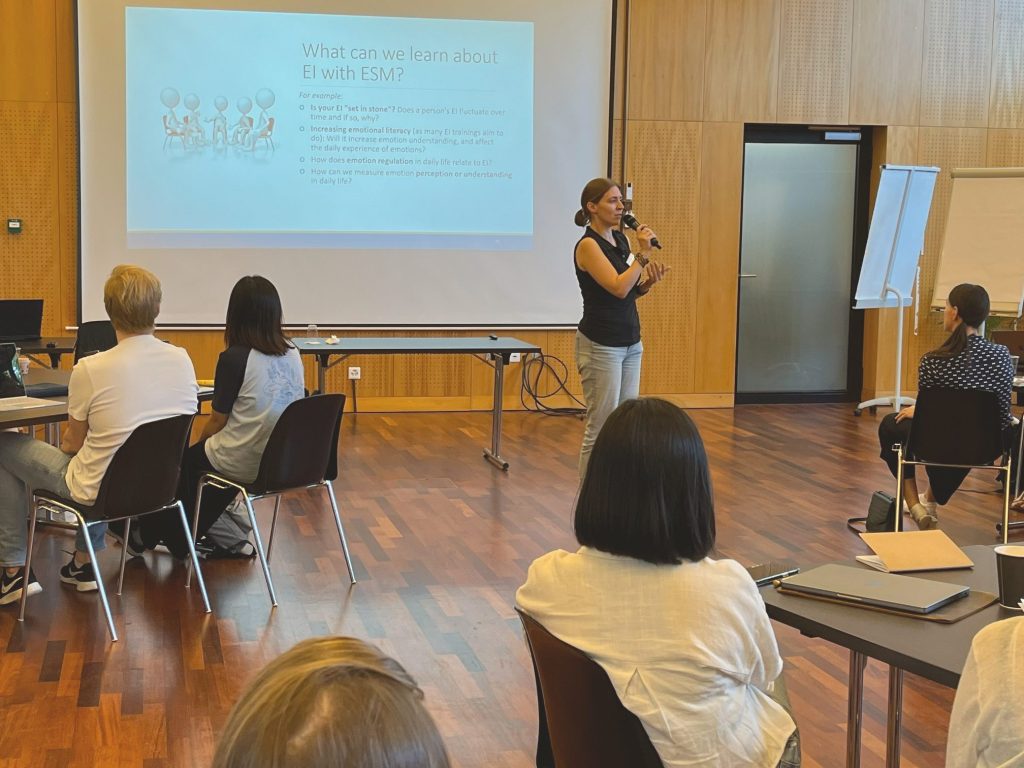
Do we need emotional skills in our jobs? How can emotional intelligence contribute to resilience? How does this work at team level?
I create and facilitate group sessions exploring emotional intelligence for your context, working with audiences spanning from small groups to classrooms.
Talks & lectures
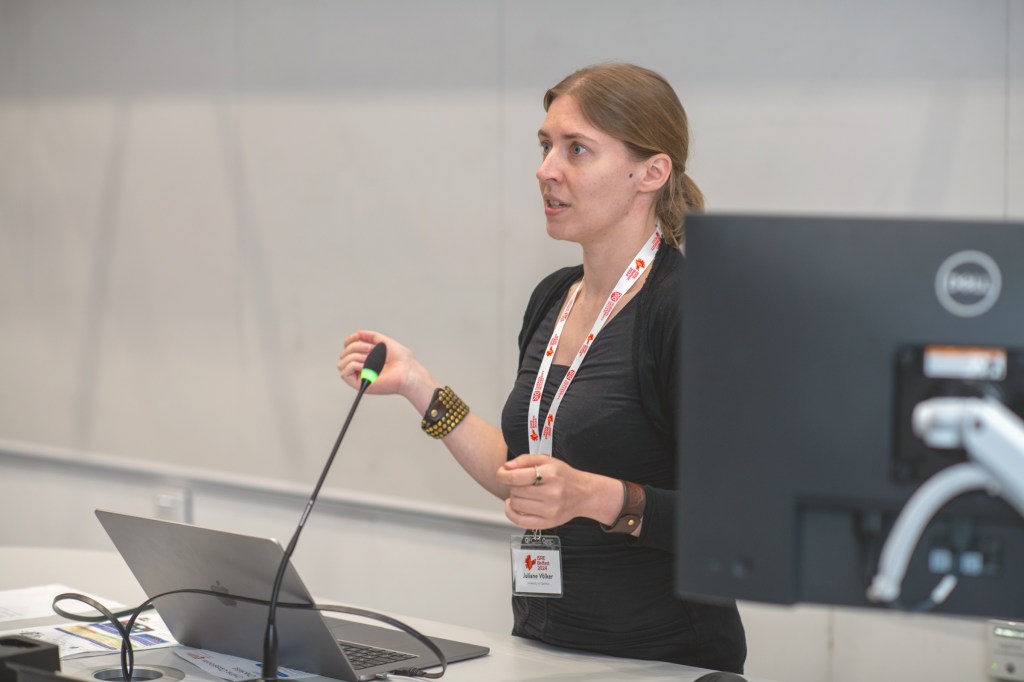
Why do we have emotions? Is emotional intelligence the same as empathy, and does it mean to be a “good person”?
Engage me as a speaker at your event! I am also available for teaching about emotions, emotional intelligence, and empirical practices in higher and continuing education.
Training & consulting
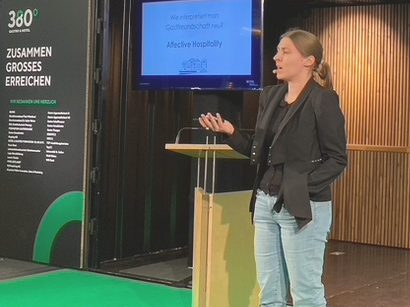
What is the role of emotional intelligence in your business? How can you practise and build it?
I offer longer-term consulting about how emotional intelligence can be conceptualised, assessed, and developed in your context. If youo plan a study, I advise on scientific methodologies and psychological assessment.
Work examples

“A new assessment of emotional competencies in hospitality”
Research about the creation and validation of a new assessment of emotional intelligence in hospitality workplaces
with EHL

“Emotions are your superpowers”
Workshop about harnessing emotional intelligence for psychological well-being in first-time managers
with EHL

“Rethinking the assessment of social and emotional skills”
Consulting about the conceptualisation and validation of a new situational judgement test of empathy in children and adolescents
with the OECD
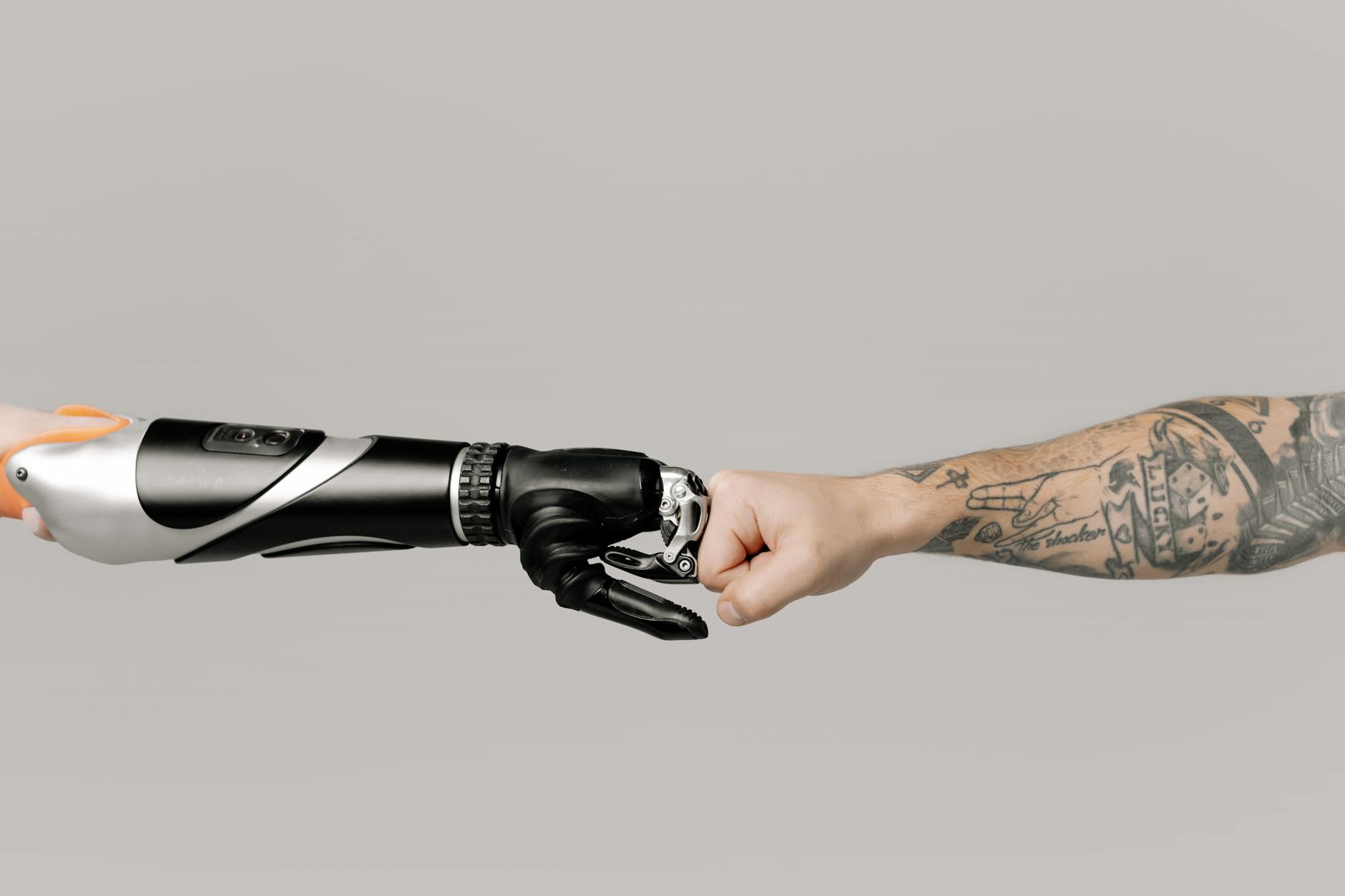
“AI and emotional intelligence at work: Redefining the human advantage”
Webinar about the humans’ and large-langugage-models’ (LLMs) capacities to decode emotional signals and reason about emotions
with Arcom Swiss

“Change Does Matter: Unlocking emotional intelligence for change”
Online Forum about how to manage emotions for leadership, effective communication, and feedback in real change scenarios
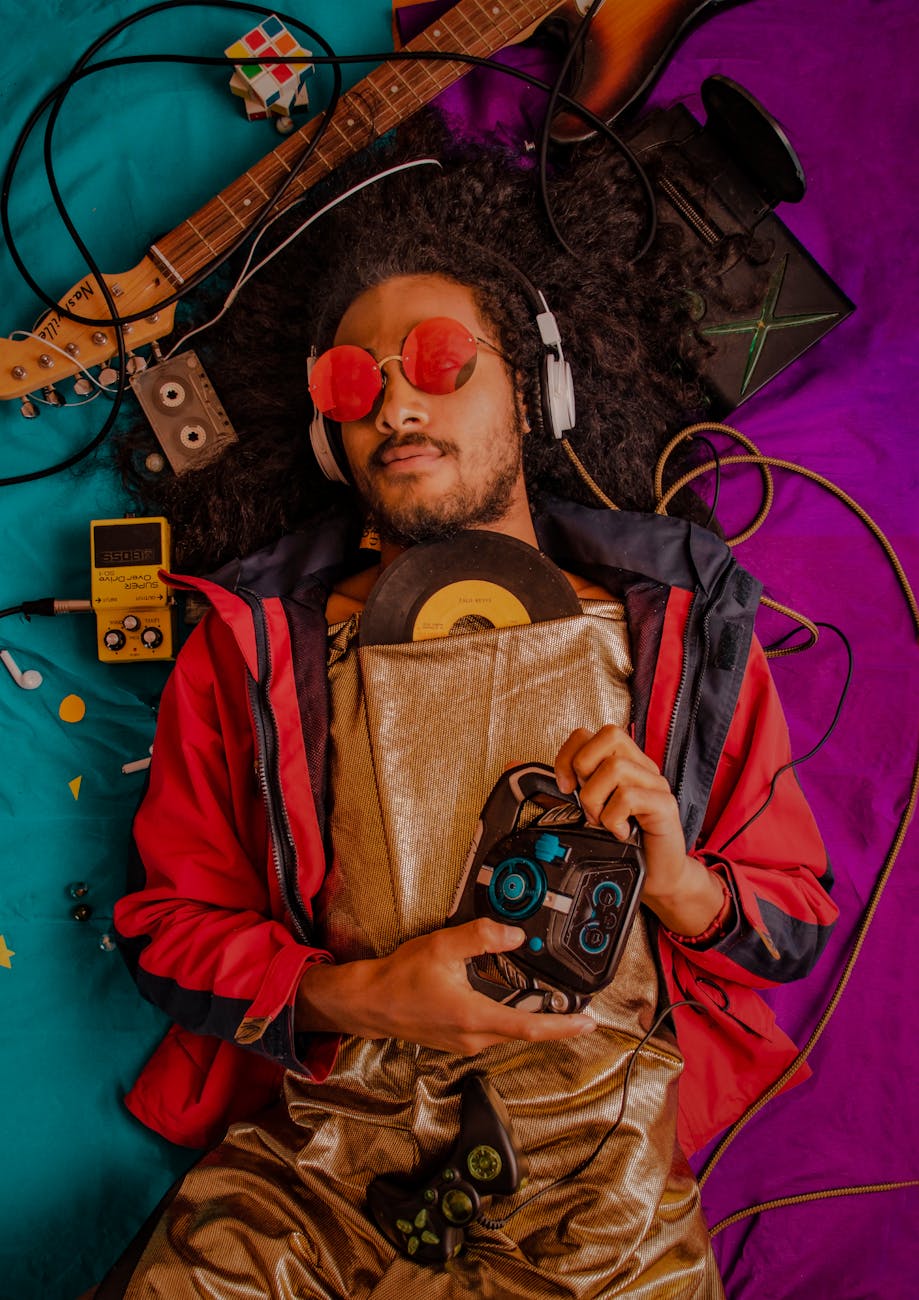
“How music & emotion benefit each other”
Radio conversation exploring how music helps to create and regulate emotions in listeners

“Emotional intelligence: What it is and how it matters”
Course about the scientific approaches to emotional intelligence assessment, trainability, and application
at the Geneva Graduate Institute

“L’intelligence émotionnelle dans les organisations: Conflits & émotions”
Course about the role of emotions for conflict management, mediation and resolution
at Uni Distance
About me
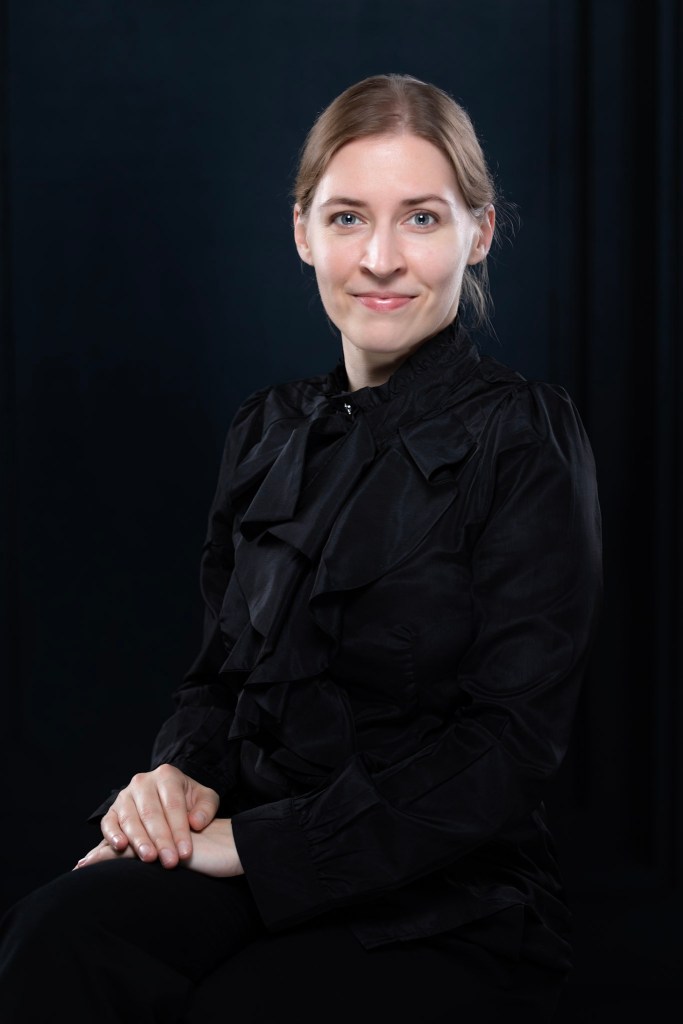
Hello, I am Juliane. I am a psychologist from Germany currently residing in Switzerland.
I entered the field of emotional intelligence when I started my doctorate in 2016. My main question back then was, is emotional intelligence truly an “intelligence”? I was also interested in how music regulates emotions, and how we communicate emotions online. I received my doctorate in 2021 from the University of Trier, Germany.
Soon after, I joined the Swiss Center for Affective Sciences (CISA) at the University of Geneva, Switzerland. I was offered me the possibility to study emotional intelligence in organisational contexts, in particular in hospitality. This also inspired me to bridge academic and business settings, and transform knowledge into practice.
Affiliations, partners & clients







Contact me
I am available for freelance and contract work. I am based in Geneva, Switzerland, and offer my services in English and German, my French skills are advanced.
Your message has been sent

 Juliane Völker